

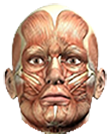
Headaches
In this section you’ll find information about headaches and other symptoms related to this body region. We’ll go over the most common diagnoses, the muscles that may be involved, and treatment and self-care strategies that can help you improve.
You’ll also find warning signs (red flags) that indicate when you need to see a doctor without delay.
1. Common symptoms and diagnoses
Symptoms:
- Headache, earache, eye pain, toothache, sore throat, jaw pain.
- Dizziness, unsteadiness, blocked ear, nausea, blurred vision, tearing, red eyes.
Diagnoses:
- Migraines, tension headaches, vertigo, sinusitis, otitis, bruxism, stress.
2. Possible muscles involved
Trapezius
- Common symptoms: Pain in the temple, jaw, behind the ear, neck, nape, or occipital region. A feeling of dizziness, tension, and stiffness in the muscle itself. Headaches, migraines.
- Complete self-treatment.
Sternocleidomastoid
- Common symptoms: Pain in the forehead, eyebrow, face, ear, throat, behind the ear, and in the occipital region. A feeling of dizziness, unsteadiness, blocked ear, otitis, tinnitus, dysphagia. Sinusitis, conjunctivitis.
- Complete self-treatment.
Masseter
- Common symptoms: Jaw pain, toothache, earache, facial pain, headache. Difficulty opening the mouth and chewing, headaches, migraines, a feeling of a blocked ear, tinnitus, bruxism.
- Complete self-treatment.
Suboccipital muscles
- Common symptoms: A horizontal band of pain from the eyes to the occipital region. A feeling of dizziness, unsteadiness, tightness pulling backward from the eye. Occipital tingling, headaches, migraines.
- Complete self-treatment.
Pectoral muscles
- Common symptoms: Pain in the front of the shoulder, chest, sternum, inner arm and elbow. A feeling of tension and shoulders rounded forward. Headache, discomfort from clothing rubbing against the skin. Tingling and loss of strength in the arm and hand. Thoracic outlet syndrome. Medial epicondylitis.
- Complete self-treatment.
3. Treatments
The goal of treatment is to reduce pain, improve mobility, and restore normal function in the affected region. In most cases, these symptoms are related to muscle issues, overload, or lack of movement, and can improve with simple self-care measures.
Treatment techniques: These self-applied techniques will help you reduce pain and improve function and quality of life.
● Compression of tender points
Apply gradually increasing pressure to painful points for 60–90 seconds to reduce muscle tension and pain.
● Self-massage: Self-massage helps reduce muscle tension, improve circulation, and decrease pain.
Do longitudinal, transverse, or fascial massage to relax the muscles and improve mobility.
● Post-isometric relaxation and stretching: They help normalize muscle tone, reduce stiffness, and restore movement.
● Mobility and strengthening: They improve function, reduce overload and stiffness, and help prevent relapses. They also improve tolerance for activities of daily living.
It’s the most effective strategy in the medium and long term.
● Habit changes: Small day-to-day changes can make a big difference:
-
Avoid holding prolonged postures.
-
Take active breaks.
-
Change position frequently.
-
Adjust and make the most of your work environment if needed.
Access the specific treatment in the “possible muscles involved” section.
4. Red flags
With these symptoms, see a doctor without delay:
- Very severe headache with sudden onset (“the worst headache of my life”).
- Fever, vomiting, stiff neck, high blood pressure.
- Dizziness, double vision, unsteadiness, tingling, loss of strength and sensation.
- Difficulty speaking and walking, one side of the face paralyzed.
- Persistent pain after trauma, a fall after a neck movement.

